


How Involved Should I Be In My Child’s Online Schooling?
How Involved Should I Be In My Child's Online Schooling? It's a question I have been getting a lot since many schools closed their doors due to novel coronavirus. A lot of parents are doing more than packing their kids lunches and sending them out the door. They're now facilitating and overseeing Learn More
Trying To Survive Online Classes With ADHD? 7 Tips
Trying To Survive Online Classes With ADHD? 7 Tips Are you enrolled in online college classes? If you’re barely hanging on, you’re not alone. With novel coronavirus forcing many universities to transition classes to an online format, many people who thought they would be studying on campus are Learn More
What Is The Autism “Spectrum”? The Answer May Surprise You
What Is Autism Spectrum Disorder (ASD)? There are many ways autism can be conceptualized. Viewed through the medical model, Autism Spectrum Disorder is a disorder to be diagnosed. A healthcare professional compares your behaviors to a list of autistic characteristics to diagnose you. These characteristics include "persistent deficits in social communication/interaction" and Learn More

Work-Life Balance Vs. Work-Life Integration: Pros & Cons
What Is Work-Life Balance, And Why Is It Important? The definition of work-life balance is an equilibrium between time spent on professional endeavors and investment in non-work priorities such as health, family, and school. Oftentimes, people think of overwhelm and overwork when they hear that phrase. Professional responsibilities Learn More

What To Do When Your Child Wants To Drop Out of College
Is Your Child Thinking About Dropping Out of College? Is your son or daughter intimidated by the demands of academic life? If your child is thinking about dropping out of college—or has already withdrawn—they’re not alone. Only 56% of college students who enrolled in a four-year program leave Learn More
Coping With ADHD At Work: How To Ask For Accommodations
Working With ADHD? You May Be Eligible For Accommodations Did you know that workers with Attention Deficit Hyperactivity Disorder (ADHD) are entitled to workplace protections? Under the Americans With Disabilities Act (ADA), employers must not discriminate against individuals with physical and mental disabilities. Upon request, they must provide reasonable accommodations to help Learn More

Autism in Women: Hiding in Plain Sight
When I hear someone ask the question, “Can women be autistic?” I realize we still haven’t overcome the cultural misconceptions about autism that were established more than 75 years ago. When German pediatrician Hans Asperger used the term “autism” in 1944, he was referring to a group of boys. Although he later realized that girls can also be autistic, Asperger initially believed autism only occurred in males.

Why You Should Start Therapy During COVID-19
For many, the thought of starting therapy in the middle of a pandemic feels overwhelming. Your schedule and routine has blown up, and you’re just trying to keep it together. Adding another appointment into the mix, even if it would be with a supportive person, feels sub-optimal. But I would suggest that now is the best time to start therapy!

The Secret Struggles of CEOs and How Therapy Helps
It’s easy to think that CEOs have it all together. After all, they had to be highly skilled to work their way up into this position. They earn a high salary, they’re well-respected, and when their company succeeds, they reap the rewards of their hard work. But, the truth is, being a CEO is an extremely stressful job.

Breaking the Cycle: Managing Conflict With Your Emerging Adult Child
Perhaps your adult child has moved back home recently, and you’re both butting heads. Or maybe you’ve noticed that every time you visit them, your conversations feel tense. And you may even find yourself dreading weekend phone calls because the two of you always end up arguing.
Why I Use Identity-First Language When Talking About Autism
Among autistic self-advocates and their allies, there have been some passionate debates about language and labels for several years. One particularly important discussion is the disagreement over whether people should use identity-first language (“autistic person”) or person-first language (“person with autism”). As expected, many different opinions have surfaced.

Improving Your Time Management with Time Awareness and Scheduling
Imagine for a moment... You have a long day ahead of you with no real commitments. And you also have a long list of things you need to finish up by tomorrow. Ideally, you would be able to get all of those tasks done in the time you have available. However, as the day winds down, you realize that you’ve gotten very little done.

Leveraging Your Strengths and Minimizing Your Struggles as an Autistic Adult in the Workplace
We live in a time of increased awareness. This is partially the result of advances in science and medicine. It’s also a cultural shift. Individuals are far more able to openly discuss how they may or may not be different from standard expectations. These parallel factors intersect in a few key ways. Learn More

How Setting Better Boundaries Will Change Your Life
Never before have we had so many outlets for personal expression. Thanks to smartphones and social media, it seems privacy has become a thing of the past. Everyone — from long-lost high school classmates to the barista at your local cafe — is sharing too much information (TMI). And they expect others Learn More

10 Common Ways Your Thinking is Making You Depressed
Depression has many causes. But what role do your thoughts and emotions play in this common and serious illness? Since your thoughts and behaviors are linked, what you think very much impacts how you feel. It only follows that your thinking has the power to make you feel depressed. The cycle builds from there.
Setting Up an Optimal Environment for Your ADHD Brain
How our brains function is not a fixed concept. The environments in which we exist can change our brains in many ways. This is good news— particularly for those living with attention-deficit/hyperactivity disorder (ADHD). ADHD is a condition marked by a pattern of inattention and/or hyperactivity-impulsivity. These factors consistently interfere with a person’s functioning or development.
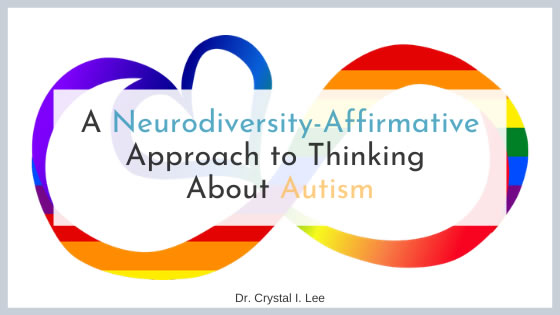
A Neurodiversity-Affirmative Approach to Thinking About Autism
For the past thirty to forty years, the medical model and psychological disorder lenses dominated the conversation about autism. Now, autistic voices are being heard. The neurodiversity perspective has grown in recognition and popularity. Neurodiversity-affirmative therapists are showing up, and they are tailoring their therapeutic approaches. This is similar to therapists who Learn More

10 Ways to Stop Being Your Worst Critic
Everyone faces criticism at times. Obviously, this is not a fun experience. Especially if the person criticizing you is someone you love. And, for many people, they are actually the harshest critic they’ll ever face. Their internal monologue can be relentlessly self-critical. Thankfully, there are ways to stop being your own worst Learn More

Why You Should Let Your Kids Fail and How to Do it Right
It can be really, really tough to watch your children struggle. As they move into their teens and early twenties, they are making more important decisions for themselves. This is both gratifying and terrifying for parents. What if they fail? But let’s be clear. Failure is not an “if” concept. Everyone has Learn More

Need to Calm the Storm?– 3 Steps for “Sitting” with Your Painful Emotions
When you feel upset, it’s only natural to try to feel better as quickly as possible. After all, fleeing from pain is what human beings do — whether it’s in the form of a saber-toothed tiger or an anxiety-provoking situation. Unsurprisingly, most of us ignore, dismiss, or bottle up our painful emotions. Learn More

7 Ways to Handle FOMO (the Fear of Missing Out)
Technology can be a powerful, useful, and productive tool. And our smartphones, in particular, enable us to connect with others in an unprecedented way. Unfortunately, though scrolling through social media can be fun, it can also become a dysfunctional coping mechanism related to underlying issues. Your phone, iPad, or computer can leave Learn More

10 Ways to Calm Your Anxiety Without Medication
Often times, when a client with anxiety first starts working with me, they wonder if they need to see a psychiatrist right away for medication. Many fear needing to have to take a pill for the rest of their lives in order to calm their anxiety. Thankfully, though medication can sometimes be Learn More
How to Effectively Advocate for Yourself at Work
Navigating the workplace of a full-time job can be challenging for anyone. There are so many moving parts, it can sometimes feel like an ever-changing obstacle course. For autistic adults, that obstacle course usually involves, well… a lot more obstacles. A major factor in succeeding at work, autistic or not, is to Learn More






How to Let Go of Anxiety and Start Adulting Like a Boss
Anxiety is a notorious and very common roadblock. It can cramp anyone’s style, regardless of who you are. When it comes to the general task of being a functional and productive adult, anxiety can be like throwing a wrench into a finely tuned machine. Everything just comes to a grinding halt. Adulting Learn More