Need a new search?

If you didn't find what you were looking for, try a new search!

How to Handle Emotional Regulation Differences as a Mixed Neurotype Couple

2025-10-30T12:38:43-07:00

When couples have different neurotypes, such as one being neurotypical and the other neurodivergent or both being neurodivergent but in different ways, emotional regulation can become a complex landscape to navigate. Understanding these differences isn't just about tolerance; it's about building bridges of comprehension that strengthen relationships and create deeper intimacy. Emotional regulation refers to the ability to manage, respond to, and modulate emotional experiences in socially appropriate and personally effective ways. Emotional regulation can be much harder for neurodivergent adults[1]. And, within mixed neurotype couples, these regulatory processes can vary dramatically. This can lead to misunderstandings, conflicts, and missed opportunities Learn More

Mixed-Neurotype Couples Therapy

2025-08-22T21:42:58-07:00

Neurodivergent-Affirming Counseling for Mixed-Neurotype Couples Relationships can be complex under any circumstances, but, for couples where partners have different neurotypes, there are often unique dynamics at play that traditional couples therapy may not fully address. Many people come to us wondering "Why are neurodivergent neurotypical relationships so hard?" At our practice, we offer neurodivergent-affirming couples counseling designed specifically for mixed-neurotype couples. This is where a partner is neurodivergent (e.g., autistic, ADHD, OCD, C-PTSD) and the other is (or others are, for polycules) a different neurotype (e.g., neurotypical-autism, autism-ADHD). Our approach is grounded in respect, validation, and a Learn More

How Psychedelic-Assisted Therapy Helps With Cognitive Flexibility

2025-06-18T10:54:22-07:00

Cognitive flexibility plays a crucial role in mental health and overall life satisfaction. This is the mind's ability to adapt thinking strategies, consider new perspectives, and shift between concepts. For many people experiencing depression, anxiety, addiction, or other mental health challenges, rigid thinking patterns can become a significant barrier to growth and healing. Psychedelic-assisted therapy has emerged as a promising approach to enhance cognitive flexibility, offering individuals new ways to break free from entrenched thought patterns and develop more adaptive ways of thinking[1]. In this article, we’ll explore what cognitive flexibility is and how psychedelic treatments can help promote neuroplasticity in Learn More

Autism and ADHD vs OCD: Understanding the Connections, Differences, and Overlaps

2025-04-21T11:24:43-07:00

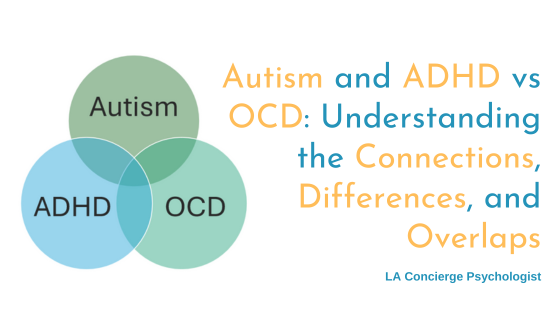
The conversation about diagnoses is rarely a binary one, especially in mental health and psychology. When we examine autism, Attention-Deficit/Hyperactivity Disorder (ADHD), and Obsessive-Compulsive Disorder (OCD), it becomes clear that these don’t exist in isolation; they intersect, overlap, and often co-occur in ways that challenge traditional diagnostic boundaries. OCD, for instance, is highly co-occurs with other conditions. Research shows that 69% of people with OCD experience at least one additional diagnosis[1], such as depression, anxiety, autism, or ADHD. For those navigating these overlapping conditions, it can feel like untangling a knotted thread: Where does one condition end and another begin? As Learn More

The Therapeutic Benefits of Autism Assessment: Beyond Diagnosis

2025-03-31T17:50:17-07:00

An autism assessment represents far more than a clinical process that provides a diagnostic label. For many people seeking to understand themselves and their needs, the assessment journey itself becomes a profound therapeutic experience with far-reaching benefits extending well beyond the diagnostic outcome. Traditional neuropsychological assessments typically involve brief clinical interviews (often just 1-1.5 hours) followed by standardized testing. While this approach may arrive at an accurate diagnostic conclusion, it often fails to provide the deep therapeutic benefits that can arise from a more extensive, conversational assessment process. The brevity of traditional interviews doesn't allow for the depth of sharing, reflection, Learn More

Autism vs Introversion: Here’s What You Need to Know

2024-10-10T13:11:40-07:00

You may have heard the terms "introvert" and "autistic" used interchangeably before — they’re often mixed up, so many people don’t know the difference at all. Because of this lack of clarity, it’s not unusual for someone to wonder if they’re just shy before realizing they’re actually autistic. Many autistic people realize they’re actually extroverted once they make the necessary accommodations for themselves. There are a lot of widespread misunderstandings between the two, and it’s important to understand the differences so people can advocate for themselves in social settings, understand themselves better, and even pursue an autism assessment. Introverts tend to Learn More

How to Manage Rejection Sensitive Dysphoria (RSD) for Adults with ADHD

2024-10-10T13:11:55-07:00

If you’ve experienced the feeling when even the smallest slight or ambiguous comment sends you spiraling, leaving you convinced you've messed up and alienated everyone around you — then you may be living with rejection sensitive dysphoria (RSD). If unmanaged, it’s an intense reaction to rejection that can sabotage relationships, someone’s career, and mental well-being. While RSD isn't an official diagnosis in the DSM-5[1], the experience of being hypersensitive to criticism or perceived rejection is very real for many people, especially those with ADHD. For ADHDers, emotional dysregulation is often par for the course, and they can have significantly higher rejection Learn More

6 Tips to Help You Manage Conflict in Friendships

2024-10-10T13:12:59-07:00

Friendship brings comfort, support, and joy into our lives. But, just like any relationship, it isn’t immune to conflict. It’s how we manage when those conflicts arise that determines the long-term success of the relationship. Conflict can ruin a friendship. Or, if handled correctly, it can help it become deeper and stronger. Understanding The Impact Of Attachment Styles on Friendships and Conflict Individual attachment styles play a big part in how each person manages conflict in a friendship. Each attachment style uses different communication patterns, some of which are helpful, while others can make conflicts more complicated. Understanding the information below Learn More

How to Use Healthy Vulnerability to Deepen Your Friendships

2024-10-10T13:13:25-07:00

Healthy vulnerability is an essential component of strong connections and trusting relationships. Healthy vulnerability involves being open and honest with others about one's emotions, thoughts, and experiences while also setting appropriate and safe boundaries”. This means that people can share their vulnerability with the people they care about without needing to compromise their own well-being and safety. Exercising emotional vulnerability in this way creates a safe and supportive space for people to communicate with openness and authenticity within their relationships. Below, you will find some guidance on how to share your vulnerability in an open and authentic way. This helps you Learn More

How Attachment Style Shows Up In Friendships

2024-10-10T13:13:50-07:00

When people hear about attachment styles, it’s usually in the context of romance. People try to determine their attachment style so they know why they respond certain ways to their partner. But attachment is much more complex, and it influences every relationship, especially your friendships. What is an Attachment Style? Attachment theory was developed by John Bowlby in the mid 20th century. He proposed the idea that children’s relationships with their early caregivers influence how they behave. And not just in infancy, but throughout their lives. The way they bonded with their guardians indicated how most of their interactions would play Learn More

Go to Top